All Categories
Featured

Why Term Insurance Protects Family Wealth
Worker compensations will be tax-free if their specific health strategy offers minimum essential coverage (MEC). Employers can repay staff members for out-of-pocket expenses and health insurance premiums, consisting of those for an HMO or PPO plan. Private coverage HRA (ICHRA): An ICHRA is likewise a stand-alone HRA, but it's readily available to companies of all sizes and has no contribution limits.

They need to have a certifying kind of individual health protection to take part. (GCHRA): Likewise known as an integrated HRA, a GCHRA is for companies of any size who use a group health strategy. Just workers registered in their employer's group strategy can get involved.
While they have no maximum contribution limitations, the IRS does not permit compensations for monthly premiums. No matter whether it's utilized in coordination with an HMO or PPO strategy, there's an HRA that can help workers spend for their out-of-pocket medical costs and, sometimes, their health insurance coverage premiums. An HRA is a popular alternative choice over standard health advantages since they're budget-friendly for employers and versatile enough for each staff member.
Securing Coverage for Seniors
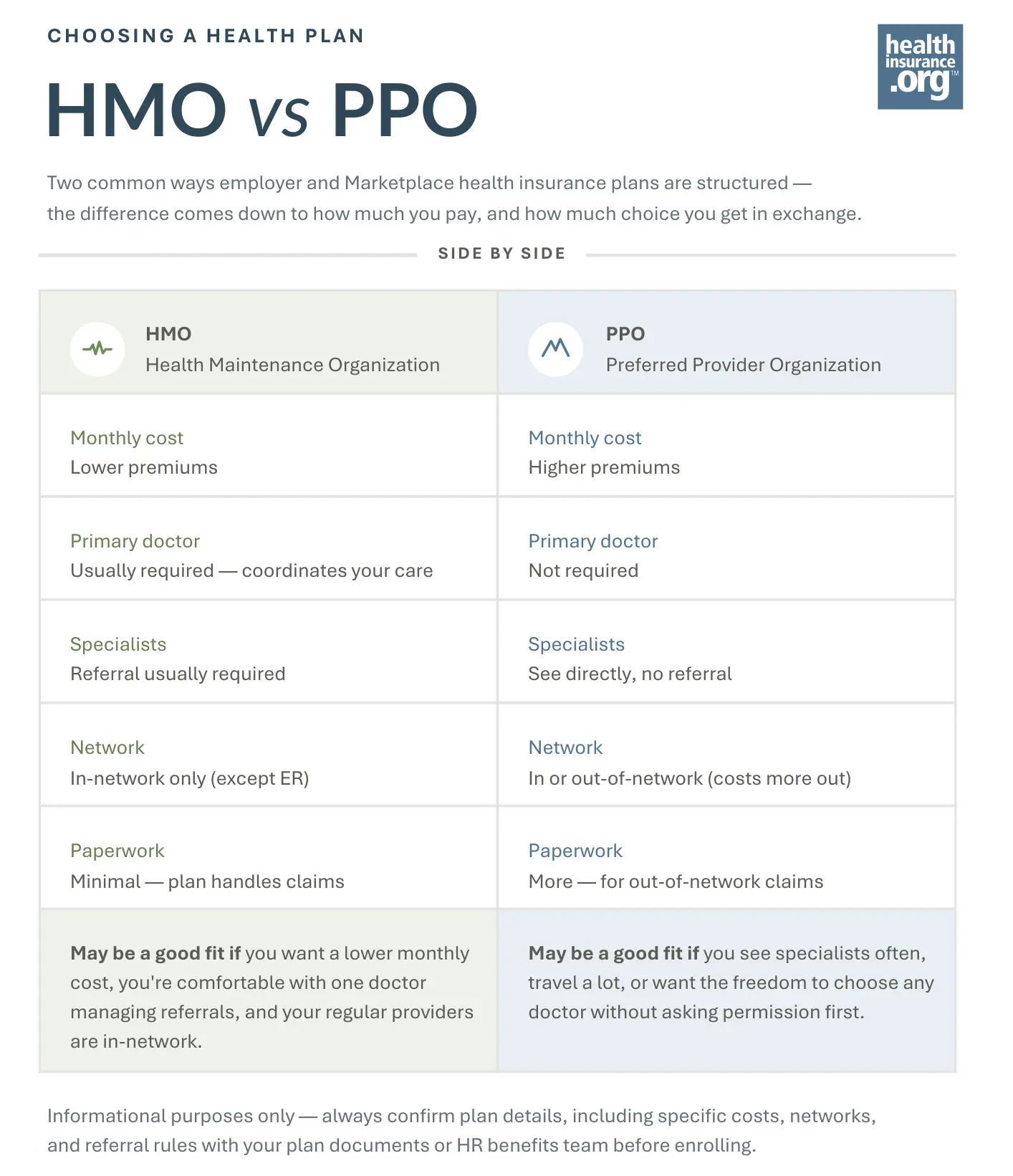
An HMO might be your best choice if you're trying to find a plan with a low premium. However, a PPO plan supplies additional flexibility if you need more control over your healthcare. That's why investigating these plans carefully, including their pros, cons, and typical expenses, is the best primary step you can take in the past deciding.

Latest Posts

Low-Cost Family Health Insurance Quotes

Reviewing Term Life Insurance Quotes

Choosing the Best 2026 Medicare Advantage Coverage