All Categories
Featured

Reviewing 2026 Medicare Advantage Options
Table of Contents
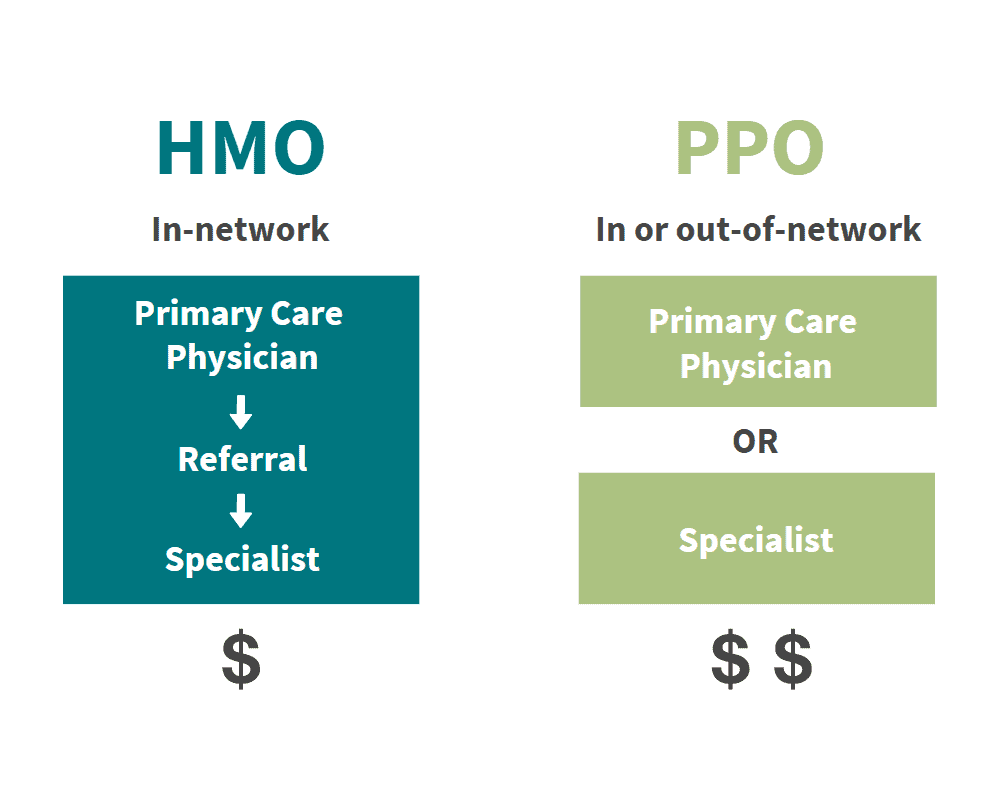
An HMO insurance plan is typically regarded as being more cost-efficient due to its lower monthly premiums and convenient due to its requirement that patients should have a medical care physician to manage their care. A PPO insurance strategy is understood for its versatility as it permits clients to manage their own care and seek out various providers/specialists without needing a recommendation.
Similar to basic insurance coverage strategies, the 2 main Medicare Advantage plans are HMO and PPO.While HMO and PPO insurance coverage plans continue to be the most common option for clients to select from, there are a variety of other insurance options. HMO and PPO insurance coverage plans are the 2 most typical health care insurance coverage strategies in the United States.
While these insurance coverage plans are various, they are similar in the sense that they provide a patient with a network of physicians, hospitals, and other health care companies that help members with their health-care journey. "HMO" acts as an acronym for "Health care Organization," while "PPO" functions as an acronym for "Preferred Supplier Organization." An HMO insurance coverage strategy is centered around a variety of healthcare facilities and health care suppliers (described as an "HMO network") that have agreed to treat patients within the network's insurance coverage strategy. A referral is needed for a client to see other professionals that are in-network or out-of-network, and frequently, getting out-of-network care only happens in emergency situation situations. This strategy offers lower month-to-month premiums for its clients, making it a cost-effective insurance alternative.
Frequently, lower expenses for prescriptions. A client can only see companies within the strategy's network unless they have a recommendation for an outside expert, or it's an emergency circumstance. Like an HMO strategy, a PPO insurance strategy offers a patient with a network (described as a "PPO network") of health care providers and medical facilities.
Essential Medicare Selection Advice for Next Year
This strategy likewise lets the patient coordinate their care and handle which service providers they wish to see, versus having a primary care medical professional. The client has more flexibility with which service providers they choose to see, whether they're within the plan's network or out-of-network. Many times, there is no need for a referral if a patient cares to see an out-of-network expert.
The client is accountable for handling their healthcare, vice a medical care physician supervising. A 'supplier network' refers to the list of physicians, professionals, medical facilities, etc that an insurance coverage firm contracts to offer medical services to its strategy members. Suppliers that are 'in-network' describe the healthcare workers and health centers that are listed in the plan.
Insurance in Redondo Beach CAThe costs associated with an HMO strategy include deductibles, which is the quantity a client should pay before insurance contributions, and month-to-month premiums, which is the quantity secured of a patient's income. Usually, the month-to-month premiums secured with an HMO strategy are lower than a PPO strategy's premiums.
Insurance in Redondo Beach CA
Each year, this led to a $6,869 protection on individuals and $19,445 protection on households, revealing a lower month-to-month premium in comparison to a PPO plan type. Deductibles, monthly premiums, and copays are expenses frequently associated with a PPO plan. Many times, the month-to-month premiums are secured with a PPO plan that is more pricey than an HMO strategy's premiums.
Steps to Obtain the Best Medicare Medigap Coverage
According to the Kaiser Family Foundation 2018 Health Advantages Study, all companies utilizing a PPO insurance strategy paid $592 as the month-to-month premium on a private and $1,694 as the regular monthly premium on a household. Every year, this resulted in a $7,149 coverage on individuals and $20,324 coverage on families, revealing a higher monthly premium in contrast to an HMO plan type.
When trying to decide which plan is best, there are lots of factors to consider, with some of the most important being versatility, cost performance, and coordination of care. If it's versatility that is essential, then a PPO insurance coverage plan may be a better fit for they allow a client to have more control over which companies they see and when, no matter a recommendation.

Another benefit to an HMO strategy is that it needs a patient to have a medical care doctor that collaborates their take care of them. This means that with a PPO insurance plan, the patient will need to manage their own care and oversee which providers/specialists they need to check out. In the end, one strategy is ruled out much better than the other.
Medical insurance strategies do not cover oral insurance coverage. To learn more on obtaining an oral strategy, such as an oral HMO strategy, 'DHMO plan,' or a dental PPO plan, 'DPPO strategy,' go to this resource. Once an American (who has actually been paying Medicare taxes for at least 10 years) turns 65, they get approved for the health insurance coverage strategy referred to as Medicare.

Latest Posts

Understanding PPO Versus HMO Plans
Reviewing 2026 Medicare Advantage Options

Understanding Whole and Term Life Insurance Strategies